Surfaces Built to Handle Daily Impact
Epoxy Floor Coatings in Winchester for garages and commercial spaces exposed to heavy use and chemical spills
Atlas Garage Systems installs epoxy floor coatings across Winchester that create seamless, chemical-resistant surfaces for residential garages, workshops, and commercial facilities. These coatings bond directly to concrete to form a protective layer that withstands motor oil, brake fluid, battery acid, and impact from dropped tools or equipment. You see the difference immediately in how the floor repels stains that would otherwise penetrate bare concrete and leave permanent marks.
The coating process involves applying multiple layers of industrial-grade epoxy that cure into a unified surface without joints or seams where moisture and contaminants can collect. The system resists chemical etching from automotive fluids and household cleaners, while the impact resistance prevents chipping when heavy objects fall. Interior applications benefit from the easy-to-clean surface that requires only occasional mopping, while exterior installations use UV-resistant formulations that prevent yellowing and degradation under direct sunlight.
Schedule a site evaluation to determine the best coating system for your specific floor conditions and usage patterns.
How Epoxy Coatings Protect Concrete Long-Term
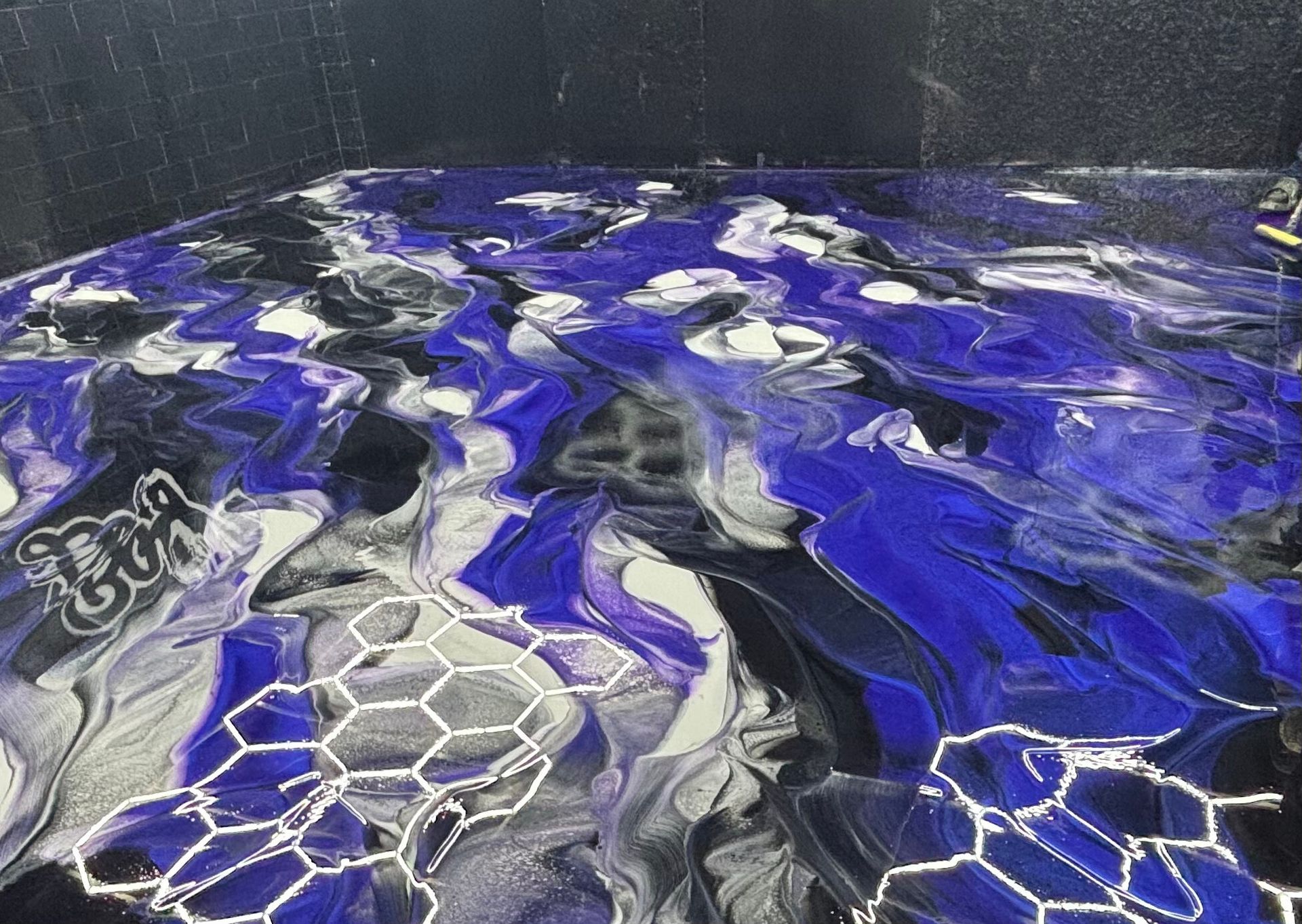
The installation begins with surface preparation that removes any existing contaminants, repairs cracks, and profiles the concrete to accept the coating. Atlas Garage Systems applies a primer coat that penetrates into the concrete pores, followed by the main epoxy layer that builds thickness and impact resistance. The final topcoat adds chemical protection and determines the finish appearance, whether high-gloss or satin. Custom color options let you match the floor to your space, from neutral grays for workshops to brighter tones for showrooms.
Once cured, the floor resists hot tire pickup, the common problem where tires on hot pavement stick to uncoated concrete and pull away surface material. You no longer see tire marks tracking across the garage or dark stains spreading from oil drips. The seamless surface prevents moisture from seeping underneath, which eliminates the freeze-thaw damage that causes concrete to flake and deteriorate in areas with temperature swings. Cleaning takes minutes instead of the scrubbing required to remove stains from bare concrete.
Coating thickness and formulation vary based on whether the floor will support passenger vehicles, commercial trucks, or manufacturing equipment. Commercial installations typically require higher build thickness and faster return-to-service times, while residential garages can use standard systems with decorative color options. The coating bonds mechanically to the concrete, so proper surface preparation determines how well it performs over decades of use.
What to Know Before Coating Your Floor
Property owners in Winchester often ask about preparation requirements, curing times, and performance under specific conditions.
What preparation does the concrete need before coating?
The surface must be clean, dry, and properly profiled through grinding or acid etching to remove any sealers, oils, or surface laitance that would prevent the epoxy from bonding. Cracks wider than hairline size get routed and filled with flexible repair compounds before coating begins.
How long before the floor can handle vehicle traffic?
Most epoxy systems allow foot traffic within 24 hours and vehicle traffic within 72 hours, though temperature and humidity in Winchester affect cure rates. Cooler weather extends cure time, while higher temperatures can accelerate it.
Why do some coatings yellow over time while others stay clear?
UV exposure breaks down standard epoxy resins, causing amber discoloration in floors near open garage doors or outdoor installations. UV-resistant topcoats contain additives that block this degradation, maintaining the original color even in direct sunlight.
What chemicals will the coating resist without damage?
Epoxy formulations handle gasoline, motor oil, antifreeze, brake fluid, battery acid, and most household cleaners without etching or softening. Prolonged exposure to certain solvents like lacquer thinner can affect the surface, so immediate cleanup prevents any potential damage.
How does the coating perform in areas with moisture coming up through the concrete?
The epoxy layer blocks moisture vapor to a degree, but slabs with active hydrostatic pressure from groundwater require moisture mitigation systems installed before coating. Testing determines whether moisture levels fall within acceptable ranges for coating adhesion.
Atlas Garage Systems evaluates your concrete condition, usage requirements, and environmental factors to recommend the coating system that delivers the durability and appearance you need. Request a detailed project estimate to review coating options specific to your floor.