Reflective Finishes That Transform Spaces
Metallic Epoxy Floors in Winchester for luxury garages and showrooms requiring high-end visual impact
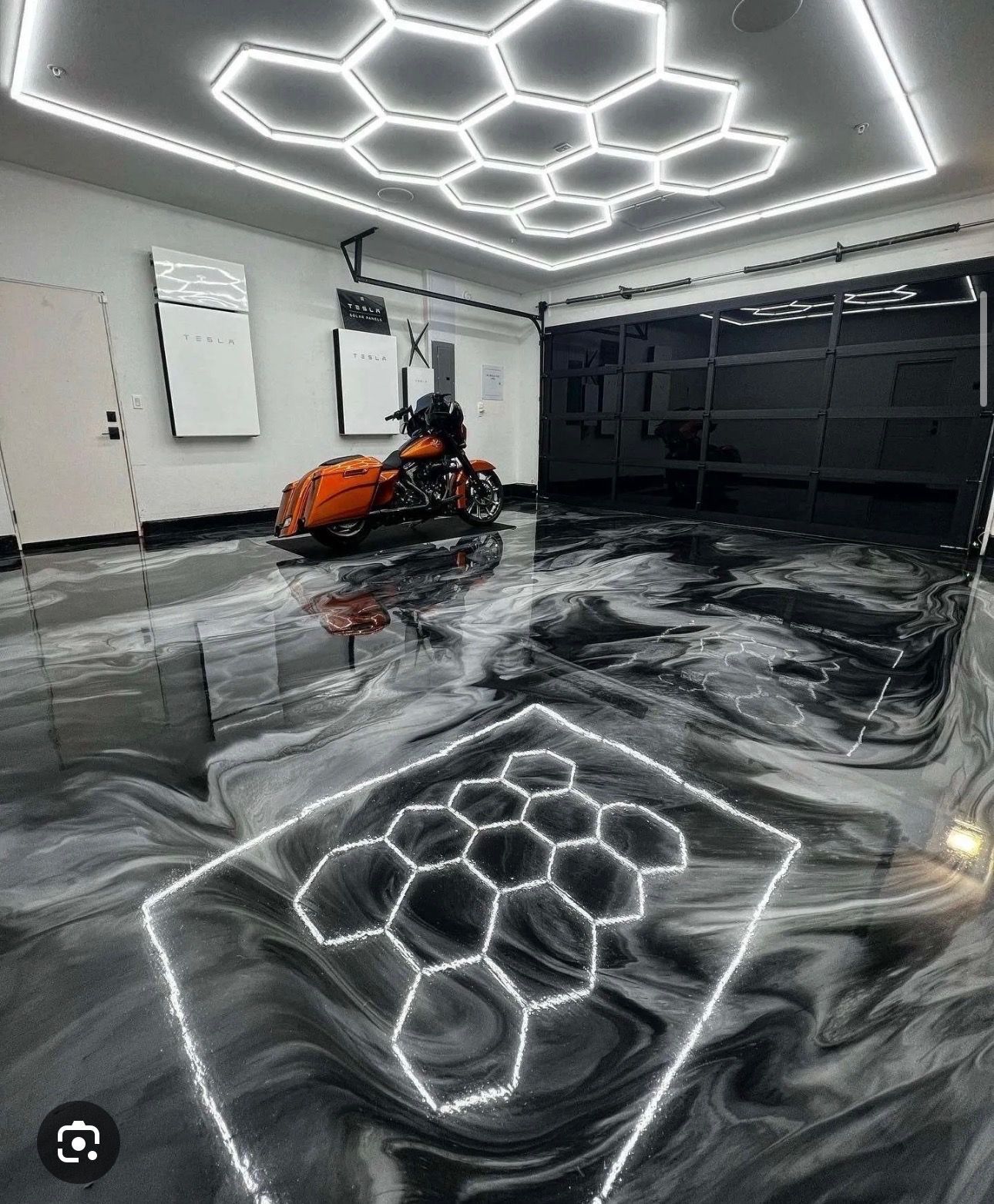
Metallic pigments suspended in clear epoxy create flowing, marbled patterns that shift appearance based on viewing angle and lighting, producing a three-dimensional effect unlike any other floor finish. The installation involves applying a base coat, then introducing metallic epoxy that gets manipulated with specialized tools to control the flow patterns and color interactions. Atlas Garage Systems installs these systems in Winchester for clients who want showroom-quality floors in residential garages, automotive galleries, retail spaces, and high-end office lobbies where the floor becomes a design feature rather than background.
Each metallic floor develops unique patterns because the installer controls how the metallic pigments move and blend before the epoxy begins to cure. Custom color combinations range from subtle silvers and pewters that mimic polished concrete to bold golds, coppers, and blues that create dramatic visual contrast. The reflective quality comes from actual metallic particles catching light, not from surface gloss alone, so the floor maintains visual interest even under diffused lighting.
Schedule a design consultation to review metallic color options and discuss pattern preferences for your specific application.
The Difference Between Metallic and Standard Coatings
Standard epoxy creates uniform color across the floor, while metallic systems produce organic, flowing patterns that vary across the surface. The application technique matters more with metallic floors because the installer uses brushes, rollers, and air movement to guide the metallic pigments into swirls, waves, or cellular patterns as the material self-levels. This means no two metallic floors look identical, even when using the same color palette. The clear topcoat goes over the metallic layer to protect the finish and add depth, with multiple coats building gloss and enhancing the three-dimensional appearance.
Once completed, the floor reflects light differently throughout the day as sun angles change and artificial lighting comes on. You notice how the metallic particles catch overhead lights and create highlights that move as you walk across the space. The seamless surface still provides the chemical resistance and durability of standard epoxy, so the floor handles automotive fluids, foot traffic, and cleaning without losing its appearance. The visual complexity hides dirt and minor surface marks better than solid colors, though regular cleaning maintains the reflective quality.
Metallic epoxy works best in climate-controlled environments where temperature and humidity remain relatively stable during installation and curing, as these factors affect how the metallic particles flow and settle. The systems require more installation time than standard coatings because pattern development cannot be rushed. Color selection involves choosing both the base tone and the metallic pigments, which interact to create the final appearance—darker bases make metallics appear more dramatic, while lighter bases produce subtler effects.
What Property Owners Usually Ask
Questions about metallic floors typically focus on pattern control, durability compared to appearance, and long-term maintenance of the reflective finish.
How much control do I have over the final pattern?
You select the color palette and general pattern style—swirls, cells, waves, or veining—but the exact flow develops organically during application as the installer manipulates the material. This variability creates the custom, one-of-a-kind appearance that defines metallic floors.
What happens if the floor gets scratched or damaged after installation?
Minor scratches typically blend into the pattern and remain nearly invisible due to the visual complexity of the metallic finish. Deeper damage can be spot-repaired by removing the topcoat in that area and reapplying, though matching the exact pattern requires skill.
Why do metallic floors cost more than standard epoxy systems?
The material itself costs more due to the metallic pigments, and installation takes longer because the applicator must work the material to develop patterns before it cures. The skill level required also exceeds that needed for standard coatings, as pattern development requires experience and artistic judgment.
How does the floor perform in Winchester garages that experience temperature fluctuations?
The epoxy itself handles temperature changes without issue, but installation must occur within specific temperature ranges to ensure proper curing and pattern development. Once cured, the floor performs like any other epoxy system in terms of thermal stability and expansion.
What cleaning products maintain the metallic appearance without dulling the finish?
pH-neutral cleaners preserve the topcoat gloss and prevent hazing that would obscure the metallic effect underneath. Abrasive cleaners or acidic solutions can etch the topcoat and reduce reflectivity over time, so proper product selection matters for long-term appearance.
Atlas Garage Systems works with clients to develop metallic floor designs that complement the space while delivering the durability expected from professional-grade coatings. Contact us to discuss color combinations and pattern options specific to your project requirements.