Fast-Cure Systems That Minimize Downtime
Polyaspartic Floor Coatings in Winchester for properties requiring rapid installation and return to service
Temperature extremes and moisture conditions that slow epoxy curing do not affect polyaspartic coatings the same way, which makes them ideal for commercial spaces that cannot remain closed for days waiting for floors to cure. Atlas Garage Systems installs polyaspartic systems in Winchester garages, retail spaces, and industrial facilities where quick turnaround matters as much as final performance. The coating cures hard enough for vehicle traffic within hours rather than days, and the UV-resistant chemistry prevents the yellowing that affects standard epoxy exposed to sunlight.
The fast cure comes from the chemical reaction between the polyaspartic resin and hardener, which proceeds regardless of ambient temperature within a workable range. This allows installation during cooler months when epoxy would cure too slowly, or in climate-controlled spaces where temperature cannot be adjusted to favor curing. The abrasion resistance exceeds that of standard epoxy, making polyaspartic the preferred choice for commercial floors that handle constant traffic, rolling toolboxes, and equipment movement.
Request a project timeline assessment to determine if one-day installation fits your operational requirements.
Why Polyaspartic Outperforms in Specific Conditions
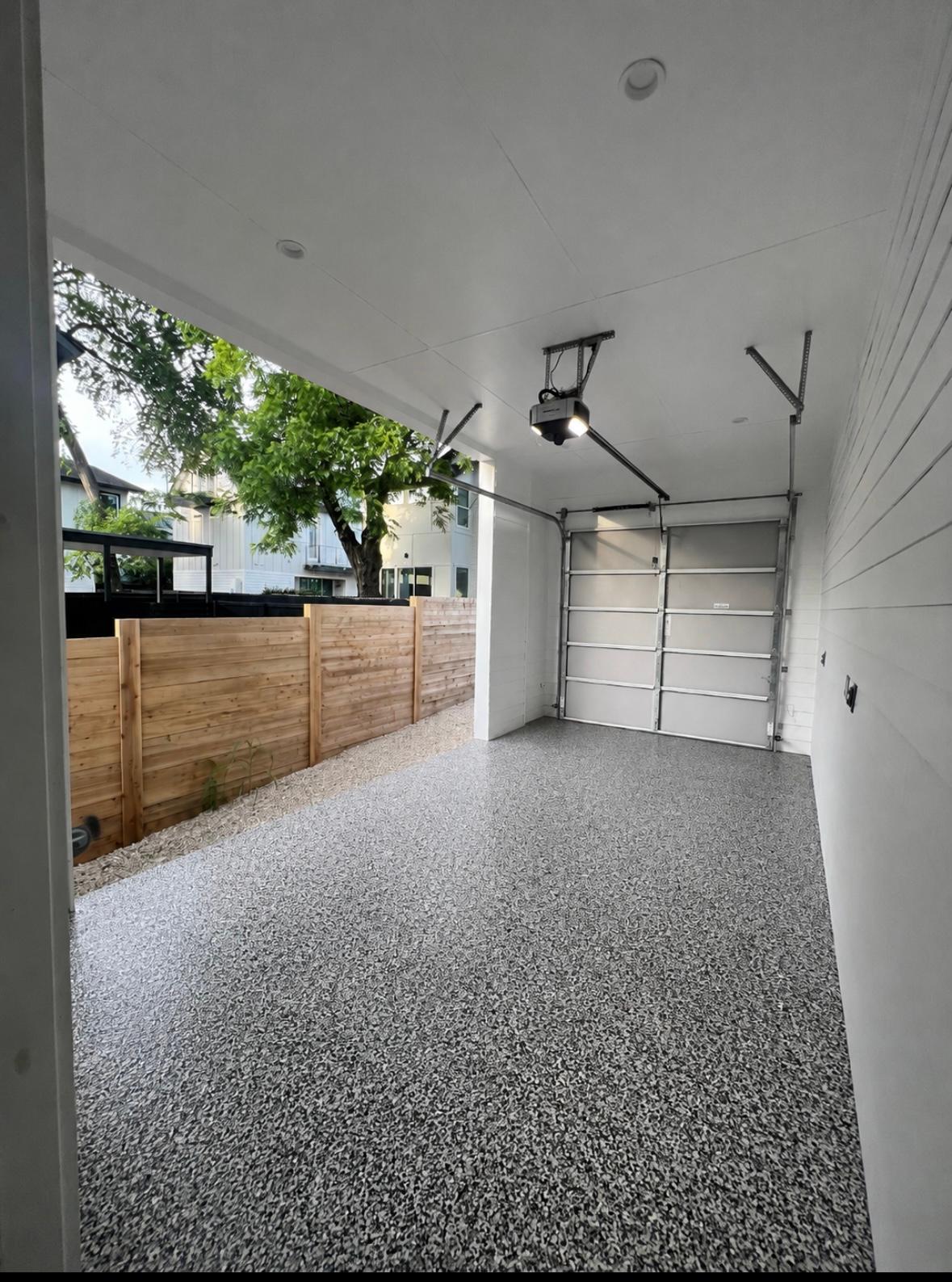
The coating goes down in a similar process to epoxy—surface preparation, primer if needed, base coat, optional flake broadcast, and clear topcoat—but the cure time between steps compresses dramatically. What would take three days with epoxy can happen in one day with polyaspartic, assuming proper environmental conditions and adequate ventilation for the faster-evaporating solvents. The long-lasting gloss finish resists scuffing and maintains clarity even in high-traffic areas, while the UV stability means exterior applications or floors near large windows will not yellow or chalk over time.
After installation, you notice the floor is ready for use far sooner than expected, allowing business operations to resume without extended closures. The surface hardness prevents the wear patterns that develop on softer coatings subjected to repetitive traffic in the same lanes. Chemical spills wipe away without etching the surface, and the gloss level stays consistent rather than dulling in high-wear zones. The coating flexibility allows slight substrate movement without cracking, which matters for slabs that experience seasonal expansion and contraction.
Polyaspartic systems work well in both garage and commercial applications, though the faster cure requires experienced installation because working time is measured in minutes rather than the longer windows available with epoxy. The superior durability justifies the higher material cost for floors that will see heavy use or need UV protection. Most installations use a flake broadcast for slip resistance and appearance, though clear systems over stained concrete are also common in retail and hospitality settings.
Common Questions About This Service
Clients evaluating polyaspartic coatings often compare it to epoxy and want to understand when the benefits justify the cost difference.
When does polyaspartic make more sense than epoxy for a garage floor?
If you need the floor back in service quickly, plan to install during cold weather, or have areas exposed to UV light, polyaspartic solves problems that complicate epoxy installations. The abrasion resistance also matters for commercial garages with constant vehicle movement.
How does the fast cure time affect installation quality?
The shorter working time requires precise mixing and efficient application because the material begins to cure within minutes of mixing. Atlas Garage Systems uses application techniques developed specifically for polyaspartic to ensure even coverage and proper thickness despite the accelerated timeline.
What does UV resistance actually prevent?
Direct sunlight breaks down standard epoxy resins through photodegradation, causing yellowing and surface chalking that eventually requires recoating. Polyaspartic chemistry resists this breakdown, maintaining the original color and gloss even in spaces with full sun exposure through windows or open garage doors.
Why does polyaspartic cost more if it installs faster?
The material itself costs significantly more than epoxy due to the specialized chemistry, and despite faster installation, the surface preparation requirements remain identical. The cost reflects the performance benefits—faster cure, better abrasion resistance, and UV stability—rather than labor savings.
How does humidity in Winchester affect polyaspartic compared to epoxy?
Polyaspartic tolerates higher humidity during installation because its cure mechanism does not rely on moisture evaporation the way some epoxy systems do. This makes it more forgiving during summer months when humidity levels rise, though extreme moisture still requires evaluation before coating.
Atlas Garage Systems evaluates your timeline, environmental conditions, and performance requirements to determine whether polyaspartic delivers enough additional value to justify the investment. Call (951) 234-6569 to discuss your specific project parameters and review coating options.