Complete Floor Transformations Built to Last
Garage Floor Coatings in Winchester for concrete surfaces showing cracks, stains, or deterioration from years of use
Bare concrete in residential and commercial garages develops oil stains, surface spalling, and hairline cracks that expand with seasonal temperature changes, creating floors that look progressively worse and become harder to clean over time. The coating process begins with addressing these existing problems—filling cracks with flexible repair compounds, grinding away surface damage, and removing all contaminants that would prevent proper adhesion. Atlas Garage Systems completes this preparation before applying epoxy or polyaspartic coating systems that seal the concrete and provide chemical-resistant, easy-maintenance surfaces across Winchester properties.
Crack repair matters because coating over unstable cracks without proper filling allows the crack to telegraph through the coating as the concrete continues to move. The repair compounds flex slightly to accommodate minor substrate movement while maintaining a sealed surface. Surface preparation removes any existing sealers, oils, or laitance through mechanical grinding or chemical etching, creating the rough profile needed for coating adhesion. Customized color and finish selections let you choose between solid colors, flake broadcasts, or metallic effects based on appearance preferences and budget.
Arrange a floor evaluation to identify specific repair needs and review coating options appropriate for your garage conditions.
What You Notice Once the Work Is Finished
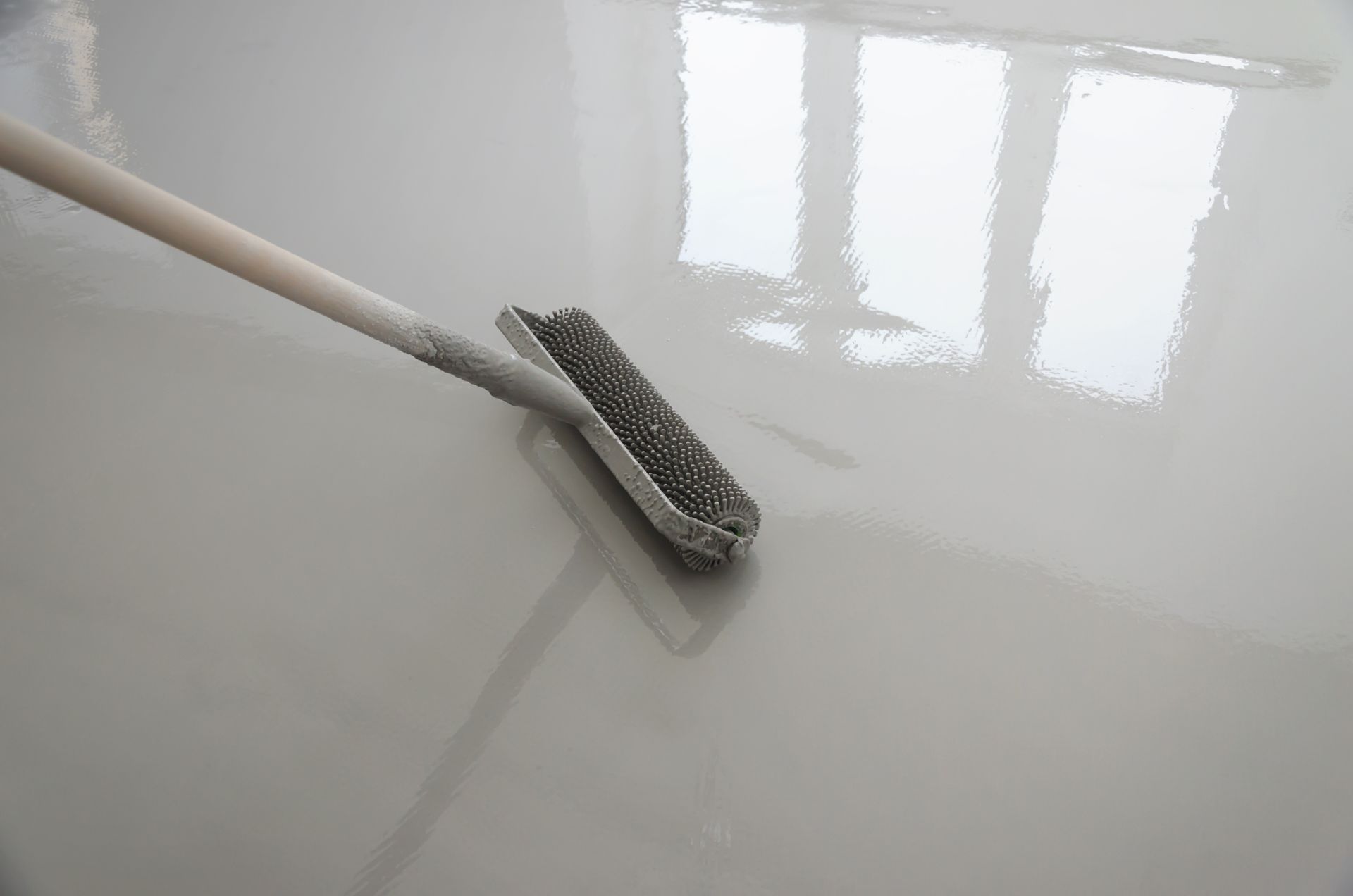
The coated floor resists staining from automotive fluids that previously soaked into the porous concrete and left permanent marks. Oil drips, antifreeze spills, and hydraulic fluid no longer penetrate the surface—they sit on top where a quick wipe removes them completely. The sealed surface also prevents moisture intrusion that causes concrete to deteriorate through freeze-thaw cycles or efflorescence, the white mineral deposits that appear when water moves through concrete and evaporates at the surface. Colors remain consistent rather than developing the patchy appearance of stained concrete, and the floor reflects light better, brightening the garage without additional lighting.
Cleaning shifts from scrubbing stains with degreasers to simple damp mopping with mild detergent. The smooth or textured surface—depending on whether flakes were broadcast—sheds dirt and dust instead of trapping it in concrete pores. Tire marks no longer accumulate because the coating prevents the heat transfer and chemical reaction that causes tires to bond with bare concrete. In commercial settings, the improved appearance and easier cleaning reduce maintenance labor and create a more professional environment for customers or employees working in the space.
Coating selection depends on usage intensity, cure time requirements, and UV exposure, with epoxy systems offering cost-effective performance for most residential garages and polyaspartic systems delivering faster cure and better abrasion resistance for commercial applications. Both systems provide stain and chemical resistance along with customizable appearance through color selection and decorative flake options. The coating thickness and number of layers adjust based on anticipated traffic and substrate condition, with damaged or porous concrete requiring additional buildup.
Questions Before Starting Your Project
Homeowners and business owners considering garage floor coatings want to understand what preparation involves, how coating choices affect performance, and what maintenance looks like long-term.
What determines whether cracks can be coated or need full replacement?
Hairline cracks and those with minimal movement get routed, filled, and coated successfully, while wide cracks with vertical displacement or active heaving indicate structural issues that coating cannot solve. The pre-installation evaluation identifies which cracks are repairable and which signal deeper problems requiring different solutions.
How do coating choices affect the timeline for getting the garage back in use?
Epoxy systems typically require 24 hours before foot traffic and 72 hours before vehicle traffic, while polyaspartic systems can handle vehicles within 12 to 24 hours depending on temperature. If minimizing downtime matters, coating selection becomes part of the project planning conversation.
Why do some garage floors show hot tire pickup while others do not?
Standard epoxy formulations can soften under the heat and weight of tires on vehicles that have just been driven, allowing the tire to stick to the surface and pull away small amounts of coating. Higher-quality epoxy formulations and polyaspartic systems resist this problem through better heat resistance and harder surface cure.
What maintenance does a coated garage floor actually need?
Regular dust mopping or sweeping removes abrasive dirt that could scratch the surface over time, and occasional wet mopping with pH-neutral cleaner prevents buildup. Prompt cleanup of spills maintains appearance, though the coating prevents permanent staining even if spills sit for a while.
How does Winchester's climate affect which coating system works best?
Temperature during installation affects cure rates for both epoxy and polyaspartic, though polyaspartic tolerates cooler conditions better. UV exposure matters for garages with windows or doors left open frequently—polyaspartic or UV-resistant epoxy topcoats prevent yellowing that occurs when standard epoxy gets regular sun exposure.
Atlas Garage Systems assesses your concrete condition, discusses your appearance and performance priorities, and recommends the coating system that delivers the results you need within your timeline. Call (951) 234-6569 to begin the evaluation process and review coating options for your garage floor project.