Floors Designed for Traction and Durability
Flake Floor Systems in Winchester for garage and workshop spaces requiring slip resistance and visual appeal
Vinyl flake floors combine a base epoxy layer with colored vinyl chips broadcast across the surface, then sealed with a clear topcoat that locks everything into a textured, slip-resistant finish. This system has become the most requested garage floor option because it hides dirt and minor imperfections while providing traction when the floor gets wet from rain, snow melt, or washing vehicles. Atlas Garage Systems applies these systems throughout Winchester in residential garages, automotive shops, and light manufacturing spaces where appearance matters as much as performance.
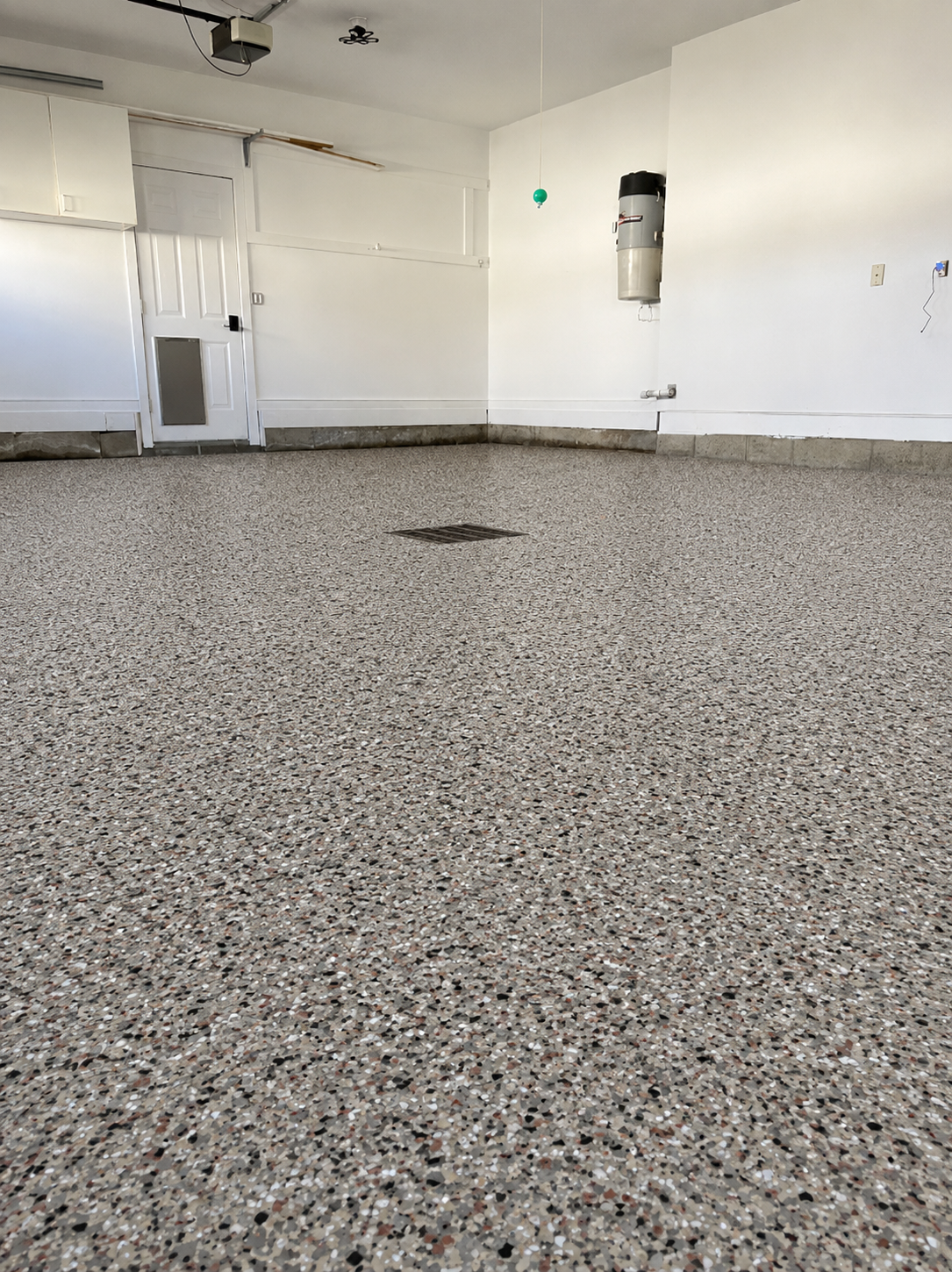
The flake layer serves a functional purpose beyond decoration—the chips create a slightly rough surface that maintains grip even when covered with water or oils. The variety of color blends ranges from subtle earth tones that blend with neutral walls to high-contrast combinations that make the floor a focal point. Full-broadcast applications cover the base coat entirely with flakes, while partial-broadcast systems allow some of the base color to show through for a different visual effect.
Arrange an on-site consultation to review color samples and determine the broadcast density that matches your space.
What Proper Flake Installation Requires
The process starts with the same concrete preparation used for standard epoxy coatings—grinding or etching the surface to remove contaminants and create proper profile. The base coat goes down first, and while it remains tacky, vinyl flakes get broadcast by hand to achieve even distribution. Once the base cures, loose flakes get scraped off, and the floor receives a light sanding to knock down any sharp edges before the clear polyurethane or polyaspartic topcoat seals everything. That topcoat determines the final gloss level and adds UV protection that prevents the flakes from fading in spaces with natural light exposure.
After installation, you notice how the textured surface diffuses light differently than smooth epoxy, reducing glare from overhead lighting. The floor hides tire marks and dirt tracking better than solid colors because the multicolor flake pattern breaks up visual continuity. Spills and stains still wipe away easily, but the texture means you no longer see every footprint or water spot the way you would on a high-gloss solid surface. The slip resistance becomes apparent the first time you walk across the floor in wet shoes—traction remains consistent even when water sheets across the surface.
Flake size and blend selection affect both appearance and texture, with smaller flakes creating a finer finish and larger chips producing more pronounced texture. Some blends use contrasting colors for visual interest, while others stick to monochromatic schemes that keep the focus on the overall space rather than the floor itself. The system works for interior and exterior applications, though UV-resistant topcoats become essential for areas exposed to direct sunlight.
Answers to Frequent Service Questions
Clients considering flake systems typically want to understand color options, texture levels, and maintenance requirements before making a decision.
How do I choose a flake color blend that works long-term?
Consider the wall color, lighting, and how much visual contrast you want—neutral blends with gray, tan, and brown tones work in most settings, while high-contrast blends make bold statements. Atlas Garage Systems provides physical samples you can place on your existing floor to see how they look under your actual lighting conditions.
What makes the surface slip-resistant compared to smooth epoxy?
The vinyl flakes create thousands of small textured points across the floor that maintain contact with shoe soles even when moisture is present, similar to how textured tile provides better traction than polished stone. The level of slip resistance increases with broadcast density—full-broadcast floors offer maximum traction.
Why do some flake floors feel rougher underfoot than others?
Flake size and the amount of topcoat buildup determine texture—larger chips and thinner topcoats leave more pronounced texture, while smaller flakes with multiple topcoat layers create smoother finishes. The choice depends on whether you prioritize maximum slip resistance or easier cleaning.
How does the floor hold up in Winchester garages that get direct afternoon sun?
UV-resistant topcoats prevent the vinyl flakes and base color from fading or yellowing when exposed to sunlight streaming through open garage doors or windows. Standard topcoats work fine for interior spaces without UV exposure, but any floor near openings needs UV protection to maintain color stability.
What ongoing maintenance does a flake floor require?
Dust mopping or sweeping removes loose dirt, and occasional damp mopping with a pH-neutral cleaner keeps the surface looking fresh. The textured finish means spills need prompt cleanup to prevent liquids from sitting in the small valleys between flakes, though the sealed topcoat still prevents staining.
Atlas Garage Systems matches flake systems to your functional needs and aesthetic preferences, ensuring the finished floor performs as intended. Request a project estimate that includes color options and finish specifications tailored to your garage or workshop.